

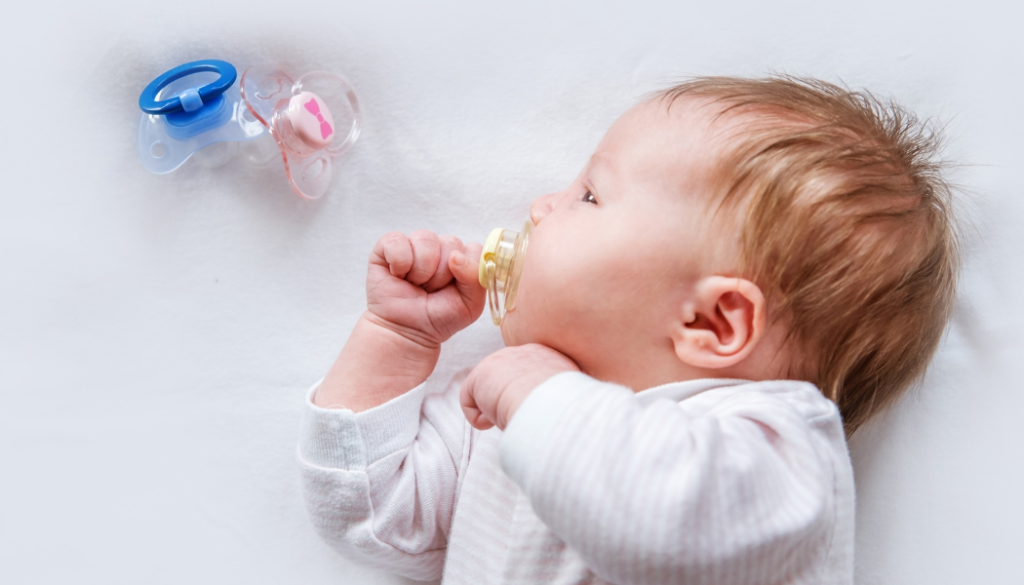
Pacifiers and thumb-sucking are common habits during infancy and early childhood. Babies naturally have a sucking reflex, and these habits can provide comfort and reassurance. For many children, they gradually stop as they grow.
However, when pacifier use or thumb-sucking continues for too long, it can influence the development and alignment of the teeth and jaws. The American Academy of Pediatric Dentistry (AAPD) recommends guidance toward discontinuing non-nutritive sucking habits by around 36 months of age.
For parents, the important question is not simply whether a child uses a pacifier or sucks their thumb, but when and how the habit should be stopped.
Why Do Children Use Pacifiers or Suck Their Thumbs?
Sucking is a natural reflex in babies. Pacifiers and thumb-sucking can help children feel calm, secure, and comfortable, particularly during sleep or stressful situations.
While these habits are generally normal in babies and young children, prolonged or frequent sucking can place repeated pressure on developing teeth and oral structures.
When Should a Child Stop Using a Pacifier?
Parents should begin gradually reducing pacifier dependence as their child gets older. The AAPD encourages discontinuation of non-nutritive sucking habits by 36 months, while its current pacifier policy notes that use beyond 18 months can influence the developing bite and oral structures.
This does not mean every child needs to stop suddenly on a particular birthday. A gradual, positive approach can make the transition easier.
Parents can start by:
- Limiting pacifier use to bedtime or naps
- Avoiding unnecessary daytime use
- Offering comfort through cuddling, stories, or other routines
- Praising the child when they go without it
- Gradually reducing dependence rather than using punishment
When Should Thumb-Sucking Stop?

Thumb-sucking can be more difficult to stop because the thumb is always available. The AAPD notes that most children stop these habits naturally, but persistent sucking beyond age three should be discussed with a pediatric dentist.
If the habit continues regularly, a dental professional can assess whether it is beginning to affect tooth position or jaw development.
Can Pacifiers and Thumb-Sucking Affect Teeth?
Yes. The potential effect depends on factors such as the duration, frequency, and intensity of the habit.
Prolonged sucking may contribute to changes such as:
- Upper front teeth tipping outward
- Anterior open bite
- Posterior crossbite
- Changes in tooth alignment
- Alterations in the developing bite
The AAPD specifically notes that prolonged pacifier use can influence the developing orofacial complex, while persistent finger-sucking can also be associated with changes in tooth position and bite.
Is a Pacifier Better Than Thumb-Sucking?
Both habits can affect developing teeth when they continue for an extended period. However, a pacifier has one practical advantage: parents can control when it is available and gradually remove it.
A thumb is always accessible, which can make stopping the habit more challenging.
The goal is not to create anxiety around normal infant behavior, but to help children gradually move away from persistent sucking habits as they grow.
How Can Parents Help a Child Stop?
Stopping a long-standing habit can take patience. Negative reactions, punishment, or constant reminders may make the process more stressful.
Instead, parents can try a supportive approach.
1. Identify When the Habit Happens
Notice whether your child sucks their thumb or asks for a pacifier mainly while sleeping, watching television, feeling tired, or experiencing stress.
Understanding the trigger can help you find another source of comfort.
2. Reduce the Habit Gradually
For pacifier users, start by limiting use to specific times, such as bedtime. Once the child adjusts, continue reducing dependence.
3. Provide Positive Encouragement
Praise your child when they successfully spend time without the pacifier or thumb-sucking. Positive reinforcement can make the process easier.
4. Offer Alternative Comfort
A bedtime story, favourite toy, cuddling, or another calming routine can provide reassurance while the child learns to stop the habit.
5. Avoid Shame or Punishment
Thumb-sucking is often a comfort behavior rather than deliberate disobedience. A calm and supportive approach is generally more helpful.
When Should Parents See a Pediatric Dentist?
Parents do not need to wait until a child develops an obvious dental problem before seeking advice. The AAPD encourages establishing a dental home by 12 months of age, allowing dental professionals to provide preventive guidance as the child’s mouth develops.
A pediatric dental evaluation is particularly useful if:
- Your child continues thumb-sucking beyond age three
- Your child has difficulty stopping the habit
- You notice changes in the position of the front teeth
- The child’s bite appears unusual
- You notice an open bite or crossbite
- You are concerned about jaw or dental development
Early assessment allows the dentist to monitor development and decide whether intervention is necessary.
Can a Dentist Help Stop Thumb-Sucking?
Yes. Many children respond well to encouragement and behavioral guidance. If the habit continues despite these approaches, a pediatric dentist may recommend additional techniques or, when appropriate, a dental appliance designed to discourage the habit.
Treatment should be individualized according to the child’s age, dental development, and the nature of the habit.
Why Early Pediatric Dental Visits Matter
Regular pediatric dental visits are not only about treating cavities. They also allow dentists to monitor the development of primary and permanent teeth, evaluate oral habits, provide preventive advice, and identify developing bite problems.
Early professional guidance can give parents reassurance and help address concerns before they become more complicated.
Pediatric Dental Care at Queens Elite Medical Center L.L.C
At Queens Elite Medical Center L.L.C, parents can seek professional guidance regarding their child’s developing oral health, including concerns related to pacifiers, thumb-sucking, tooth development, and dental habits.
A pediatric dental assessment can help determine whether a child’s sucking habit is within the expected stage of development or whether it may require additional attention.
Conclusion
Pacifier use and thumb-sucking are normal behaviors during infancy and early childhood. The concern generally arises when these habits continue for an extended period and begin affecting the developing teeth or bite.
Parents should aim to gradually discontinue non-nutritive sucking habits by around three years of age, while seeking professional advice if the habit continues or if changes in the child’s teeth or bite become noticeable.
With patience, positive encouragement, and appropriate pediatric dental guidance, most children can successfully move beyond these habits and continue developing a healthy smile.