
Palatal Expander in Dubai
A palatal expander is a dental appliance used to gradually widen a narrow upper jaw, creating more space for teeth and correcting bite problems that braces alone can’t fix. At Queens Elite Medical Center in Dubai Marina, our orthodontic team uses palatal expanders to treat crowding, crossbites, and narrow arches in both children and adults — often as a first step before braces or Invisalign.
If your child’s dentist has recommended a palatal expander, or you’re an adult exploring options for a narrow jaw, this page covers how the appliance works, the different types available, what treatment involves, and what it costs in Dubai.
What Is a Palatal Expander?
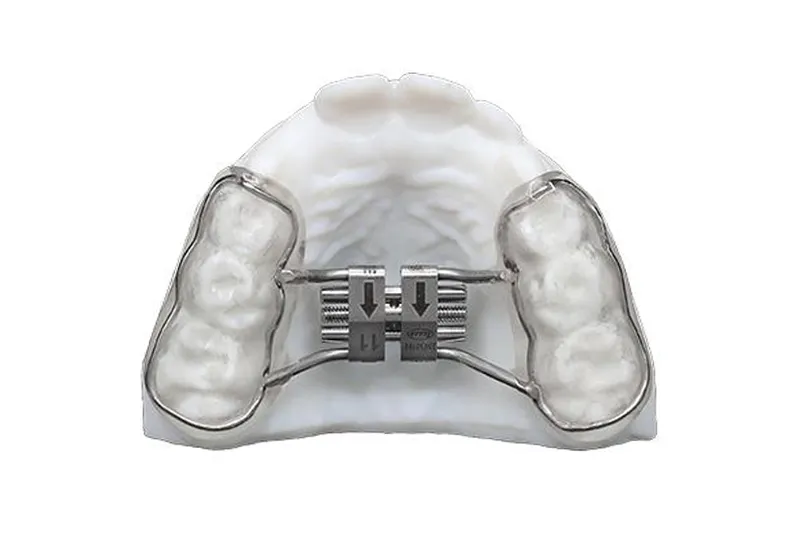
A palatal expander is a custom-fitted orthodontic appliance that sits against the roof of the mouth and attaches to the upper back teeth. It applies gentle, controlled pressure across the midline of the palate — the suture that runs down the center of the upper jaw — gradually separating it and allowing new bone to fill in the widened space.
In growing children, this suture hasn’t fully fused, which is why expanders tend to work predictably before the teenage years. The appliance is typically custom-made from a mold or digital scan of your teeth, then adjusted at home using a small key, turned once or twice a day until the desired width is reached — usually over a few weeks.
How Does a Palatal Expander Work?
The expander is anchored to the upper molars on either side of the mouth, with a small screw mechanism running across the middle. Each turn of the key applies a tiny amount of outward pressure on both halves of the upper jaw. Over time, this pressure gradually separates the midpalatal suture, and the body responds by filling the new gap with bone — permanently widening the arch rather than just moving teeth within it.
Most patients feel pressure or tightness for a few minutes after each turn, but this isn’t usually described as painful. A common and completely normal sign that the expander is working is a gap appearing between the front teeth as the jaw widens — this space typically closes on its own once braces or aligners are used to bring the teeth back together. After active expansion, the appliance is left in place for several months as a retainer, giving the new bone time to harden fully.
Who Needs a Palatal Expander?
An orthodontist may recommend a palatal expander when a patient has one or more of the following:
- Crowded teeth with insufficient space to erupt or align properly
- A posterior crossbite, where the upper back teeth sit inside the lower teeth when biting down
- A narrow or high-arched palate
- A history of mouth breathing or prolonged thumb-sucking that has affected upper jaw development
- A case where widening the jaw can help avoid extracting permanent teeth later in treatment
These signs are confirmed with a clinical exam and imaging, not by observation alone, so a consultation with our orthodontic team is the first step to finding out whether expansion is the right fit.
Types of Palatal Expanders
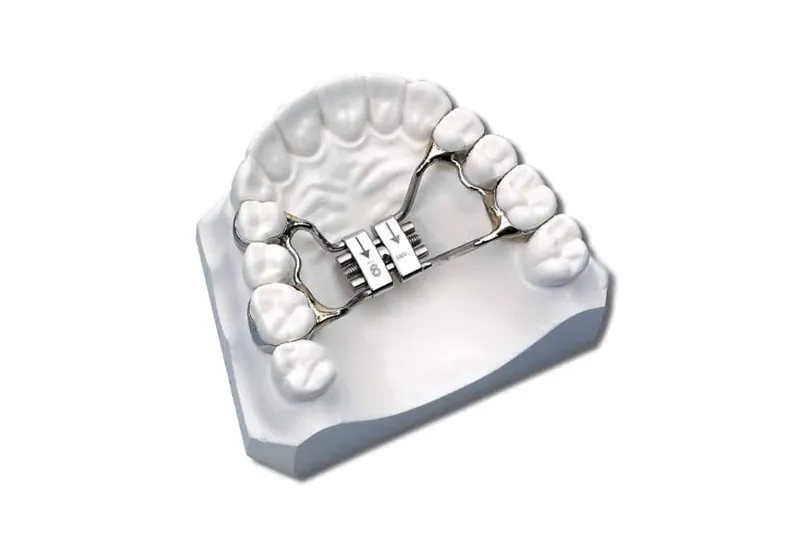
Rapid Palatal Expander (RPE)
Slow Palatal Expander
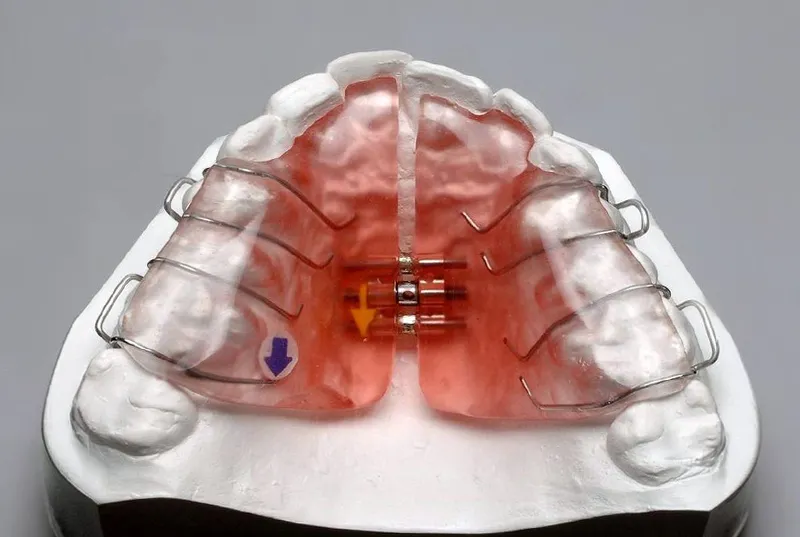
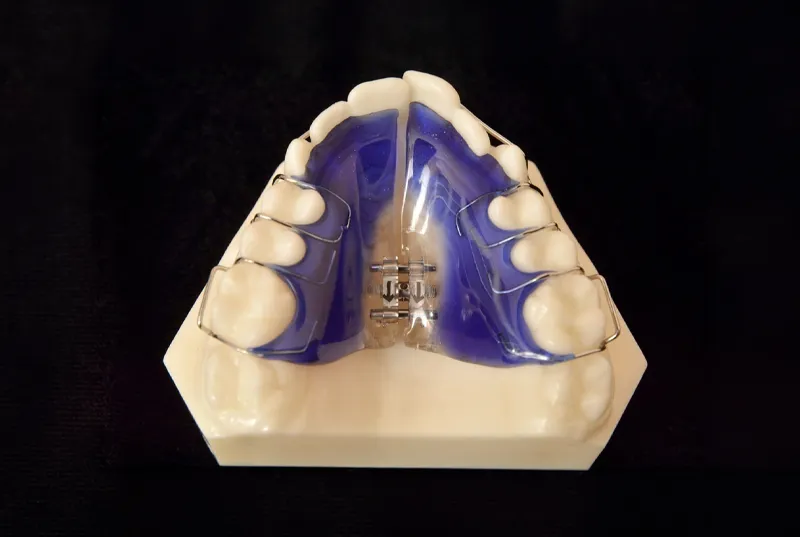
Removable Palatal Expander
Bonded Expander
The Treatment Process
-
Consultation and assessment
Our orthodontic team examines the bite, takes X-rays or a 3D scan, and determines whether expansion is needed and which type of appliance is appropriate.
-
Fitting appointment
The custom-made expander is fitted and bonded or banded into place, and you're shown exactly how to activate it at home.
-
Active expansion.
Over several weeks, the appliance is turned daily or every other day, gradually widening the palate. Short follow-up visits during this phase let us track progress.
-
Retention
Once the target width is reached, the expander stays in place for a few months so the new bone can fully solidify.
-
Next steps
For many patients, expansion is followed by braces or Invisalign to bring the teeth into their final aligned position now that there's enough space.
Aftercare: Eating, Cleaning & Adjusting to Your Expander
For the first few days after fitting, sticking to soft foods makes eating more comfortable while you adjust to the appliance. Sticky, hard, or chewy foods — think caramel, hard candy, or crusty bread — are best avoided throughout treatment, since they can dislodge the appliance or get trapped around it.
Cleaning around the expander takes a little extra care. Brushing gently around and underneath the appliance after meals, along with using a water flosser on a low setting, helps clear food particles that can otherwise build up around the screw mechanism. It’s normal to notice a slight lisp or change in speech for the first week or so as your tongue adjusts to the appliance being in place — this resolves on its own as you get used to it.
While expansion is most predictable in growing children, adults with a narrow jaw or ongoing crowding aren’t automatically ruled out. Because the midpalatal suture has fused by adulthood, treatment approaches differ — options can include slower, bone-anchored expansion techniques or, in more complex cases, a surgically assisted approach done in coordination with a maxillofacial surgeon. Suitability is assessed case by case, based on a full clinical evaluation and imaging, during a consultation with our team.
Why Choose Queens Elite Medical Center
Meet the Smile Behind the Practice
(Co-Founder)