

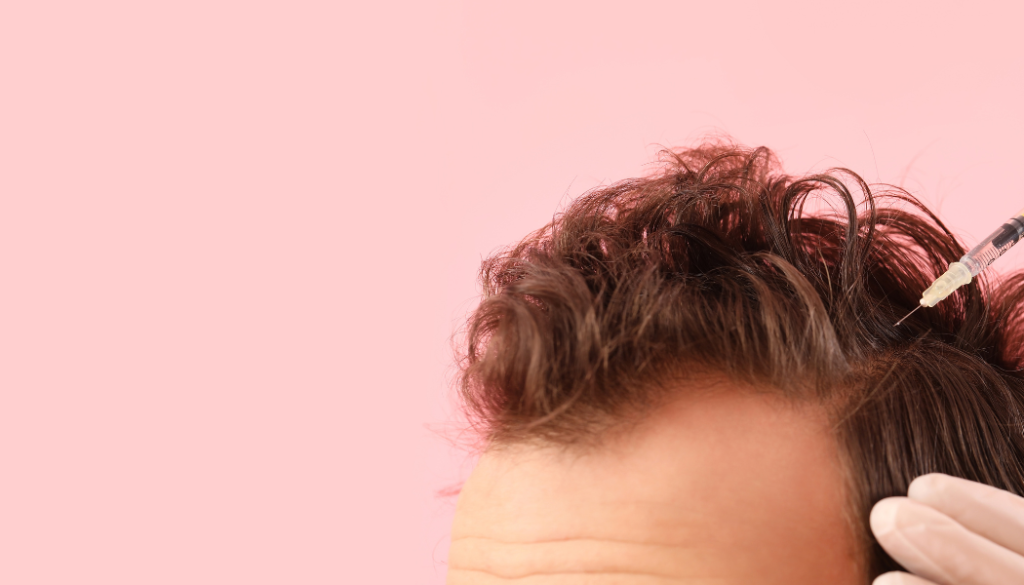
Hair thinning does not look the same in everyone. Men may notice a receding hairline or thinning crown, while women often experience reduced density across the top of the scalp or a widening part. Since the causes and patterns can vary, hair restoration treatments need to be considered according to the individual rather than simply based on gender.
Platelet-rich plasma (PRP) therapy is one option that has gained attention for people experiencing certain forms of hair loss. It uses components obtained from the patient’s own blood and is designed to support the activity of weakened hair follicles.
But does PRP work differently for men and women? The treatment concept is broadly similar, while the reasons for using it, the areas being treated, and the overall treatment plan may differ.
Why Hair Loss Can Look Different in Men and Women
Hair follicles respond to hormones, genetics, ageing, and other biological factors. These influences can produce different patterns of hair loss.
Hair Loss in Men
Male pattern hair loss frequently begins with changes around the temples and frontal hairline. For some men, thinning becomes more noticeable at the crown before gradually affecting a larger area.
Genetic sensitivity to androgens is an important factor in this type of hair loss. Over time, susceptible follicles can become smaller and produce increasingly fine hairs.
This means that a man seeking PRP may be concerned about a receding hairline, thinning crown, or reduced density on the top of the scalp.
Hair Loss in Women
Women can also develop hereditary pattern hair loss, but its appearance is often different. A widening centre part, reduced volume, or diffuse thinning over the upper scalp may be more noticeable than a receding hairline.
Women may also experience temporary or persistent shedding associated with factors such as hormonal changes, nutritional problems, stress, certain medications, or medical conditions.
Consequently, identifying the reason for hair loss can be particularly important before selecting a treatment.
What Is the Role of PRP?
PRP therapy involves obtaining a concentrated platelet-rich component from a person’s blood. Platelets contain various growth-related substances that may help create a supportive environment around hair follicles.
Research investigating PRP for pattern hair loss has reported encouraging findings in areas such as hair density and follicle thickness. However, results vary between studies and patients, and there is no single universally accepted PRP protocol for hair loss.
For this reason, PRP should be viewed as a potential treatment option rather than a guaranteed solution.
PRP for Men: What Is Usually Considered?
When PRP is considered for a man with pattern hair loss, the condition of the existing follicles is an important consideration.
Treatment may be discussed for areas such as:
- The crown
- The frontal scalp
- Areas with early thinning
- Regions where hair has become noticeably finer
One potential objective is to improve the appearance of existing hair rather than simply focusing on hair that has already been lost.
Men with advanced baldness may have different treatment needs from those experiencing early-stage thinning. A clinical assessment can help determine whether PRP is a reasonable option.
PRP for Women: What Makes the Assessment Important?
Female hair loss can have several possible explanations. Someone experiencing increased shedding may not necessarily have female pattern hair loss.
A clinician may therefore consider factors such as:
- The distribution of thinning
- How long the problem has been present
- Recent changes in health or lifestyle
- Hormonal factors
- Scalp health
- Existing medications
- Possible nutritional concerns
If the hair follicles remain active but are producing weaker or thinner hair, PRP may be considered as part of an individualized treatment plan.
Is the PRP Treatment Itself Different?
The underlying concept of PRP is not fundamentally different for men and women. In both cases, platelet-rich plasma derived from the person’s own blood is used as part of the treatment.
What can change is the treatment strategy.
The number and location of treatment areas, treatment intervals, and overall goals can depend on the patient’s hair-loss pattern and clinical assessment.
For example, a man may seek treatment primarily for crown thinning, whereas a woman may be concerned about reduced density throughout the central scalp.
Therefore, treatment should be personalized instead of following an identical plan for every patient.
Does PRP Work Better for Men or Women?
There is no reliable answer that applies to everyone.
Studies have reported potential benefits of PRP for both male and female pattern hair loss. However, research varies considerably in terms of patient selection, PRP preparation, injection methods, and follow-up periods.
Individual factors can also influence the outcome.
The important question is therefore not simply whether the patient is male or female. It is whether the type and stage of hair loss are appropriate for PRP.
When Might PRP Be Considered?
PRP may be worth discussing when a person is experiencing thinning hair but still has existing follicles in the affected area.
A consultation can help determine:
- What type of hair loss is occurring.
- Whether the follicles are still producing hair.
- Whether an underlying condition could be contributing to the problem.
- Whether PRP is suitable.
- Whether another treatment or combination approach may be more appropriate.
This assessment is particularly useful because treating unexplained hair shedding without identifying its cause may not address the underlying problem.
What Should Patients Expect From PRP?
Hair does not grow overnight, regardless of the treatment used. Any improvement following PRP should be assessed over time.
Depending on the individual, treatment goals may include:
- Supporting existing follicles
- Improving the appearance of hair density
- Making thinning areas look fuller
- Supporting the growth cycle of weakened follicles
- Improving the overall appearance of the scalp
Results are not guaranteed, and expectations should be realistic. PRP may be more appropriate for some types and stages of hair loss than others.
Can PRP Be Part of a Larger Hair Restoration Plan?
Yes. Hair loss management does not always involve a single treatment.
Depending on the diagnosis, PRP may be considered alongside other approaches. The right combination depends on factors such as the cause of hair loss, its severity, the patient’s medical history, and previous treatments.
A personalized plan can help avoid choosing treatments based solely on popularity or online trends.
Common Questions About PRP for Men and Women
Is PRP suitable for both men and women?
PRP may be considered for certain types of hair loss in both men and women. Suitability depends on the individual’s diagnosis and the condition of the hair follicles.
Do men need more PRP sessions than women?
Not necessarily. Treatment frequency should be based on the individual’s condition and the plan recommended by the treating professional rather than gender alone.
Can PRP help a receding hairline?
PRP may be considered for some men with thinning around the frontal scalp, but its suitability depends on the condition of the follicles and the stage of hair loss.
Can women with diffuse thinning consider PRP?
Some women with certain forms of diffuse or pattern thinning may be candidates. However, other potential causes of hair loss should be considered before treatment.
How long does it take to see PRP results?
Hair growth is gradual, so any changes usually require time to become noticeable. The timeline can differ considerably between individuals.
Does PRP permanently stop hair loss?
PRP should not be considered a permanent cure for hereditary hair loss. It may form part of an ongoing strategy for managing thinning hair.
Conclusion
Although men and women can both experience pattern hair loss, the way thinning develops and the factors contributing to it can be different. PRP offers a potential non-surgical option for supporting hair density, with research showing promising but variable results.
The most important step is identifying why the hair is thinning before choosing a treatment. A personalized assessment can help determine whether PRP is appropriate and whether it should be considered alongside other evidence-based approaches.
For individuals considering PRP for hair loss in Dubai, a consultation with a qualified medical professional can help establish realistic expectations and an appropriate treatment strategy. Queens Elite Medical Center provides PRP-based hair restoration services in Dubai Marina.