

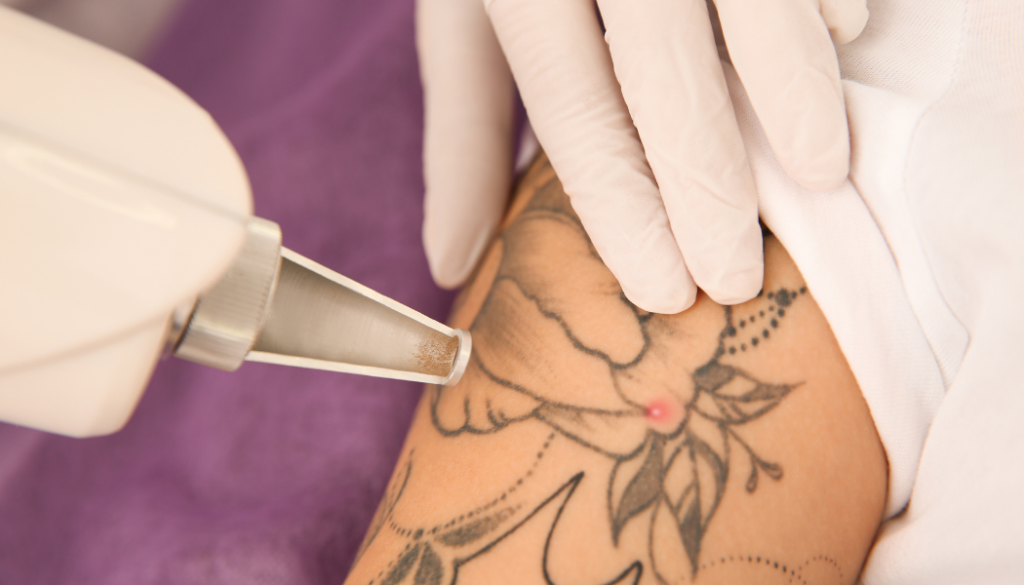
Tattoos are designed to be long-lasting, but people’s preferences can change over time. A tattoo that once had personal meaning may no longer fit your lifestyle, appearance, or future plans. This is why many people explore professional tattoo removal options.
But what actually happens to tattoo ink when a tattoo is removed? The process is more complex than simply making the visible ink disappear. Modern laser tattoo removal works by targeting ink particles beneath the skin and helping the body gradually clear them.
Understanding how this process works can help you develop realistic expectations before considering treatment.
Where Does Tattoo Ink Go?
When a tattoo is created, pigment is placed into the deeper layer of the skin, known as the dermis. The body’s natural processes cannot easily remove these relatively large pigment particles, which is why tattoos can remain visible for many years.
During laser tattoo removal, specialised laser energy targets the tattoo pigment. The energy breaks larger ink particles into much smaller fragments.
Once the particles have been fragmented, the body’s natural clearance processes can gradually remove them. This is one reason tattoo removal is generally performed over multiple sessions rather than completed in a single treatment.
How Does Laser Tattoo Removal Work?
Laser tattoo removal uses carefully controlled pulses of laser energy to target unwanted tattoo pigment.
The process generally involves three main stages:
1. Laser Energy Targets the Pigment
The laser delivers short pulses of energy toward the tattoo. Different wavelengths may be used depending on factors such as the ink colour, tattoo characteristics, and skin type.
The goal is to direct energy toward the pigment while limiting unnecessary exposure to the surrounding skin.
2. Ink Particles Are Broken Down
The laser energy causes the tattoo pigment to fragment into smaller particles. These fragments are significantly easier for the body to process than the original larger particles.
The visible appearance of the tattoo may not change dramatically immediately after treatment because the body’s clearance process takes time.
3. The Body Gradually Clears the Fragments
After the laser has fragmented the pigment, the body gradually processes and clears the smaller particles.
This natural process takes place over time. As a result, tattoo fading generally continues between treatment sessions rather than only during the appointment itself.
Why Does Tattoo Removal Require Multiple Sessions?
A common misconception is that a laser can remove an entire tattoo in one appointment. In reality, several factors can influence how many sessions a person may need.
The tattoo’s:
- Size
- Colour
- Ink type
- Ink depth
- Age
- Location
- Density
- Previous treatment history
can all influence the response to laser treatment.
The skin also needs time to recover between sessions, while the body gradually clears fragmented pigment. For these reasons, treatment is typically planned as a series of sessions rather than one procedure.
Why Do Some Tattoo Colours Respond Differently?
Not all tattoo pigments respond to laser energy in the same way.
Different colours absorb different wavelengths of light. Some pigments may therefore respond more readily to particular laser wavelengths, while others can require a different approach.
Black and darker pigments often respond well to certain laser wavelengths, while some lighter or brighter colours may be more challenging.
A professional assessment can help determine the characteristics of the tattoo and the most appropriate treatment approach.
Does Tattoo Age Affect Removal?
Tattoo age can be one factor that influences its appearance and response to treatment.
Older tattoos may have already experienced some natural fading due to factors such as sun exposure and the body’s gradual processing of pigment. However, an older tattoo is not automatically easier to remove.
Ink composition, depth, density, colour, and individual skin characteristics can all be important when assessing removal.
Does Skin Type Matter?
Skin type is also considered when planning laser tattoo removal.
The laser settings and treatment approach need to be selected carefully according to the individual’s skin characteristics and the tattoo itself. A professional assessment helps determine appropriate settings and reduces the risk of unnecessary skin injury.
This is particularly important because laser energy interacts with both tattoo pigment and the skin surrounding it.
What Happens to the Skin After Treatment?
After laser tattoo removal, the treated area may experience temporary effects such as redness, swelling, sensitivity, or other short-term changes.
These effects can vary from person to person and depend on factors such as the tattoo, treatment settings, and individual skin response.
Following the aftercare instructions provided by the treating professional is important. Protecting the treated area from excessive sun exposure and avoiding unnecessary irritation can help support proper skin recovery.
Can Laser Tattoo Removal Completely Remove a Tattoo?
The outcome of tattoo removal varies between individuals.
Some tattoos may become significantly lighter, while complete clearance cannot always be guaranteed. Certain pigments can be particularly difficult to treat, and factors such as tattoo depth, ink composition, skin type, and previous treatments can affect results.
A professional consultation is therefore important before starting treatment. It allows the tattoo and skin to be assessed and helps establish realistic expectations.
Why DIY Tattoo Removal Can Be Risky
People searching for tattoo removal may come across home remedies, creams, abrasive products, or other DIY techniques. These approaches can irritate or damage the skin and may not effectively reach the tattoo pigment located in the dermis.
Attempting to remove a tattoo without professional guidance can increase the risk of unwanted skin changes, scarring, or other complications.
Professional laser treatment uses controlled energy and appropriate treatment protocols designed for the specific tattoo and skin characteristics.
Choosing Professional Tattoo Removal in Dubai
If you are considering laser tattoo removal in Dubai, professional assessment should be an important part of the process.
At Queens Elite Medical, tattoo removal treatment can be evaluated based on the tattoo’s colour, size, location, pigment characteristics, and your individual skin type. A consultation can help determine whether laser treatment is suitable and what type of treatment plan may be appropriate.
Conclusion
Permanent tattoos may be designed to last, but modern laser technology can help reduce unwanted tattoo pigment by breaking it into smaller particles that the body can gradually clear.
The process takes time, and results depend on several factors, including tattoo colour, ink depth, size, location, skin characteristics, and individual response to treatment.
If you are considering tattoo removal, a professional consultation is the best way to understand your options, expected treatment process, and realistic results.