

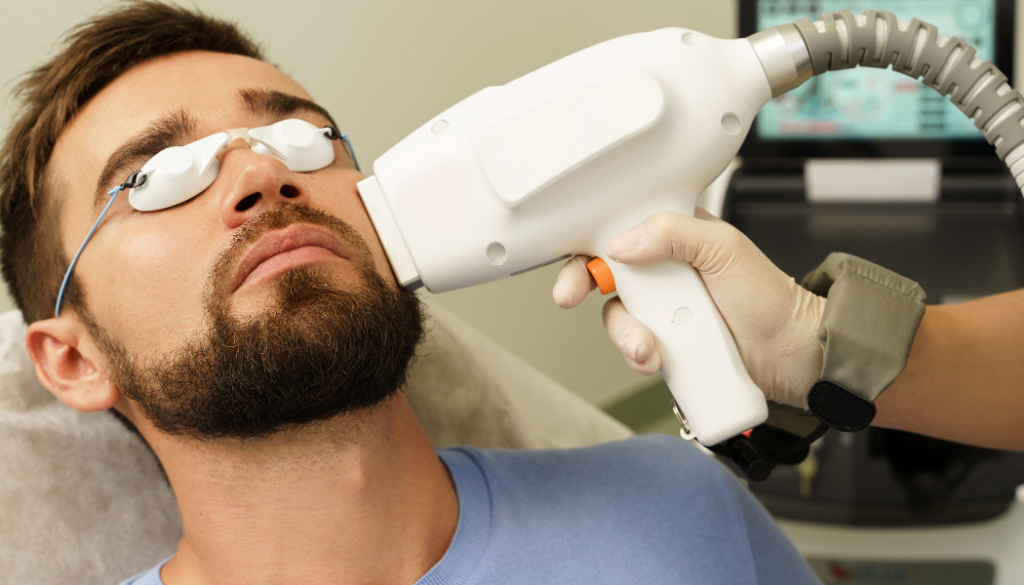
For many men, maintaining a neat beard involves frequent shaving, trimming, and shaping. While these grooming habits can create a clean appearance, repeated shaving can sometimes lead to razor bumps, irritation, and ingrown hairs. These problems are particularly common when facial hair is coarse or curly.
Laser beard shaping offers an alternative approach by targeting unwanted hair at the follicle and gradually reducing hair growth. With fewer hairs requiring frequent shaving, it may help reduce some of the irritation associated with regular razor use.
What Causes Razor Bumps and Ingrown Hairs?
Razor bumps, medically known as pseudofolliculitis barbae, can occur when freshly cut hairs curl back toward or into the skin. The body can react to these hairs with inflammation, resulting in small red or raised bumps.
Ingrown hairs develop when a hair grows back into the skin rather than outward through the follicle. Curly and coarse facial hair can be more prone to this problem. Frequent close shaving can also contribute because very short hair may more easily curve back into the skin.
For men who shave their beard and neck areas regularly, this can become a recurring grooming concern.
How Can Laser Beard Shaping Help?
Laser hair removal works by directing laser energy toward the pigment in the hair and damaging the targeted hair follicle. Over a series of treatments, this can lead to long-term reduction in hair growth. Dermatologists commonly use laser hair removal on areas of the face, including the upper lip, chin, and other facial areas.
For beard shaping, treatment can be planned around areas where you want to reduce unwanted growth while maintaining the beard pattern you prefer.
1. Less Frequent Shaving
One of the main advantages is the potential reduction in the need for frequent shaving. If hair growth becomes less dense over time, you may not need to repeatedly shave the same areas to maintain a defined beard line.
Less frequent close shaving can mean fewer opportunities for irritation and ingrown hairs.
2. Fewer Short Hairs Curling Back Into the Skin
Ingrown hairs can develop when short facial hairs curve back into the skin. Reducing unwanted hair growth may help decrease the number of hairs available to cause this problem.
This can be particularly useful for men who regularly experience bumps along the cheeks, jawline, or neck after shaving.
3. Reduced Razor-Related Irritation
Repeated shaving can irritate the skin, especially when a razor is pressed too firmly against the face or the same area is shaved repeatedly. Dermatologists recommend shaving with the direction of hair growth and avoiding excessive pressure to reduce the risk of razor bumps.
Reducing the need for frequent shaving can therefore make beard maintenance easier for some men.
4. A More Consistent Beard Outline
Laser beard shaping is not necessarily about removing the entire beard. Treatment can be customized to target unwanted hair around areas such as the cheeks, neck, or other parts of the beard line.
This makes it possible to work toward a more defined appearance while reducing unwanted growth outside the desired beard shape.
Laser Beard Shaping vs. Traditional Shaving
Shaving provides an immediate way to remove visible hair, but it does not reduce the hair follicle’s ability to produce new hair. This means the routine has to be repeated regularly.
Laser hair removal takes a different approach by targeting the follicle. Multiple sessions are generally required, and hair growth typically becomes reduced progressively rather than disappearing after one treatment.
For men who experience persistent razor bumps despite improving their shaving technique, discussing laser hair removal with a qualified medical professional may be worthwhile.
Who May Consider Laser Beard Shaping?
Laser beard shaping may be worth considering if you:
- Regularly experience razor bumps after shaving
- Frequently develop ingrown hairs around the beard area
- Have unwanted hair outside your preferred beard outline
- Want to reduce the amount of time spent shaving
- Find frequent shaving irritating to your skin
- Want a more consistent beard or neck line
However, not every bump around the beard is caused by an ingrown hair. Acne, folliculitis, and other skin conditions can sometimes look similar. If bumps are persistent, painful, infected, or leaving scars, professional evaluation is important.
How to Prepare for Laser Beard Shaping
Before treatment, follow the instructions provided by your medical or aesthetic professional. Your provider may advise you to avoid certain hair-removal methods and limit sun exposure before treatment.
It is also important to disclose relevant medications, skin conditions, recent tanning, and previous cosmetic treatments during your consultation. This allows the treatment plan to be adapted to your skin and hair characteristics.
What About Aftercare?
After laser treatment, your skin may be temporarily sensitive or irritated. Following the provider’s aftercare instructions can help support comfortable healing.
Avoid unnecessarily rubbing or irritating the treated area, and follow any recommendations regarding skincare products and sun protection.
If you experience significant swelling, blistering, persistent pain, or another unexpected reaction, contact your treatment provider for advice.
How Many Sessions Are Needed?
Laser hair removal usually requires multiple treatment sessions because hairs grow through different stages, and the laser is most effective when the targeted hair is in an appropriate growth phase. The number of sessions varies depending on factors such as hair colour, hair thickness, skin type, treatment area, and individual response.
Your provider can assess your beard growth and recommend a treatment schedule suited to your goals.
Can Laser Beard Shaping Completely Prevent Ingrown Hairs?
No treatment can guarantee that ingrown hairs will never occur. However, reducing unwanted hair growth and decreasing the need for repeated close shaving may help reduce one of the common triggers associated with razor bumps and ingrown hairs.
Good shaving habits can also make a difference. The American Academy of Dermatology recommends softening the hair with water, using shaving cream or gel, shaving in the direction of hair growth, and avoiding excessive pressure.
Why Choose Professional Laser Beard Shaping?
Facial skin can be sensitive, and beard shaping requires precision because the goal may be to reduce hair in specific areas while preserving the desired beard pattern.
A professional consultation can help determine whether laser treatment is appropriate for your skin type, hair characteristics, and grooming goals. It also provides an opportunity to discuss the areas you want shaped and understand what results can realistically be expected.
Conclusion
Razor bumps and ingrown hairs can make regular beard maintenance frustrating. While better shaving techniques can help, men who continue to experience these problems may consider longer-term hair-reduction options.
Laser beard shaping can help reduce unwanted facial hair growth over a series of treatments, potentially reducing the need for frequent close shaving and making beard-line maintenance easier.
If you are considering laser beard hair removal in Dubai, a professional consultation at Queens Elite Medical can help you understand whether laser beard shaping is suitable for your skin, hair type, and preferred beard style.