

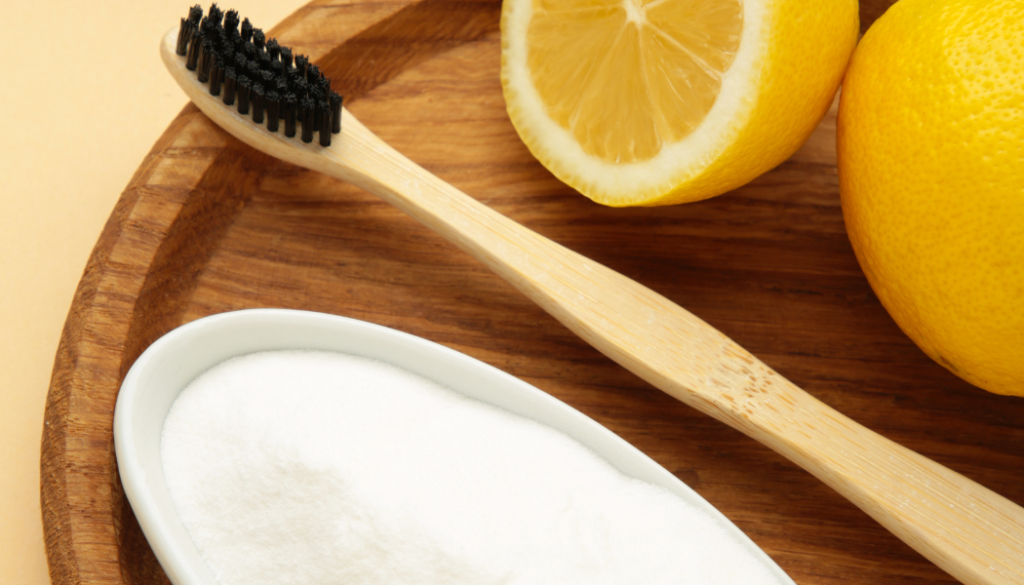
A bright, white smile is something many people desire. As a result, home remedies for teeth whitening have become increasingly popular. Two ingredients often mentioned are baking soda and lemon. But can they really whiten your teeth, and more importantly, are they safe to use?
Before trying any DIY whitening method, it is important to understand how these ingredients affect your teeth.
Can Baking Soda Whiten Teeth?
Baking soda is known for its mild cleaning properties. It may help remove some surface stains caused by coffee, tea, coloured foods, and smoking.
Because baking soda is mildly abrasive, it can make teeth appear cleaner and brighter by removing external stains. However, it does not work like professional teeth-whitening treatments and may not be effective for deep or internal tooth discolouration.
Using baking soda too aggressively or too frequently may also cause unnecessary wear on the tooth surface. For this reason, it is better to use dentist-recommended oral care products rather than repeatedly applying homemade baking soda mixtures.
Is Lemon Safe for Teeth Whitening?
Lemon is often considered a natural whitening ingredient because of its acidic properties. However, this acidity is also the main reason why applying lemon juice directly to teeth can be harmful.
Lemon contains citric acid, which can weaken tooth enamel when used repeatedly. Enamel is the protective outer layer of the teeth, and once it is significantly damaged, it cannot naturally grow back.
Frequent use of lemon juice on teeth may lead to:
- Tooth sensitivity
- Enamel erosion
- Increased risk of tooth damage
- A more yellow appearance as enamel becomes thinner
Therefore, lemon should not be used regularly as a DIY teeth-whitening treatment.
What Happens When Baking Soda and Lemon Are Mixed?
Some people mix baking soda and lemon juice to create a homemade whitening paste. While this may seem like a natural solution, the combination can expose teeth to both abrasive cleaning and acid.
The mixture may temporarily remove some surface stains, but repeated use can potentially damage enamel and increase sensitivity. A homemade paste also does not provide the controlled treatment offered by professional teeth-whitening procedures.
Just because an ingredient is natural does not mean it is always safe for your teeth.
Are Baking Soda and Lemon Effective for Yellow Teeth?
Baking soda may help with certain surface stains, but lemon is not a recommended whitening solution because of its effect on enamel.
The effectiveness of any whitening method also depends on the cause of tooth discolouration. Teeth may become darker due to:
- Coffee and tea
- Smoking
- Coloured foods and drinks
- Natural ageing
- Certain medications
- Dental trauma
- Internal tooth discolouration
Home remedies may not work effectively for every type of stain. In some cases, professional teeth whitening may be a more suitable option.
A Safer Option for a Brighter Smile
If you want to improve the colour of your teeth, professional dental care can provide a safer and more personalised approach.
At Queens Elite Medical Center L.L.C, professional teeth-whitening treatments are available for suitable patients who want to achieve a brighter smile. Before treatment, a dental professional can assess your teeth and gums and determine the most appropriate whitening option based on your individual needs.
Professional whitening can offer more predictable results than experimenting with acidic or abrasive DIY remedies.
How to Maintain a Brighter Smile
You can help reduce surface stains and maintain a healthy-looking smile by following good oral hygiene habits:
- Brush your teeth twice a day.
- Clean between your teeth regularly.
- Limit frequent consumption of strongly coloured drinks.
- Avoid smoking.
- Visit your dentist for regular check-ups and cleaning.
- Avoid using acidic substances directly on your teeth.
- Follow professional advice when considering teeth whitening.
Conclusion
Baking soda may help remove some surface stains, but it should not be used excessively. Lemon, due to its high acidity, can damage tooth enamel and is not a safe long-term teeth-whitening solution.
For a brighter smile without risking unnecessary damage to your teeth, it is best to choose a professionally recommended whitening approach.
If you are considering teeth whitening, visit Queens Elite Medical Center L.L.C for a professional consultation and discover the right option for achieving a healthier, brighter, and more confident smile.