

Teeth Retainers in Dubai Marina
Your braces or Invisalign treatment has moved your teeth into their new positions. A retainer is what keeps them there. Without one, teeth tend to drift back toward their old positions, often within the first months and sometimes years later.
At Queens Elite Medical in Dubai Marina we make and fit custom retainers for patients who finished treatment with us and for patients who finished elsewhere. This page explains the four retainer types we fit, how long to wear them, how to look after them, what to do if one is lost or broken, and what they cost.
Why Are Retainers Essential After Braces or Invisalign?
Teeth are held in place by bone and gum tissue, and both need time to settle around the new positions after braces or Invisalign. During that time the teeth tend to move back, a change called relapse. A retainer holds the teeth where they are while the bone and gums adapt.
Wearing your retainer is the cheapest way to protect the time and money you put into treatment. Relapse is slow, so many patients notice it only when their front teeth begin to overlap again.
How Do Teeth Retainers Work?
Controlling the Movement of Teeth
Relapse Prevention
Bone Restructuring
How Long Do You Need to Wear a Retainer?
Most patients wear a retainer all day at first, then move to nights only. Your orthodontist sets your own schedule and adjusts it as your results hold.
-
Full-time wear
First 3–6 months after braces or Invisalign
Wear your removable retainer all day and night. Take it out only to eat, drink anything other than water, and clean it. Your orthodontist confirms the hours.
-
Nights only
After the first stage
Once your teeth have settled, you wear the retainer at night. Many patients continue this long-term to keep their result.
-
Fixed retainer
Always in place
A bonded wire stays behind your teeth day and night. It needs careful cleaning and regular check-ups.
Do not stop wearing your retainer without asking. If you want to reduce wear, book a check first so we can see whether your teeth have stayed in place.
Custom Retainer Options at Queens Elite Medical in Dubai Marina
Essix Retainer (Clear Retainer)
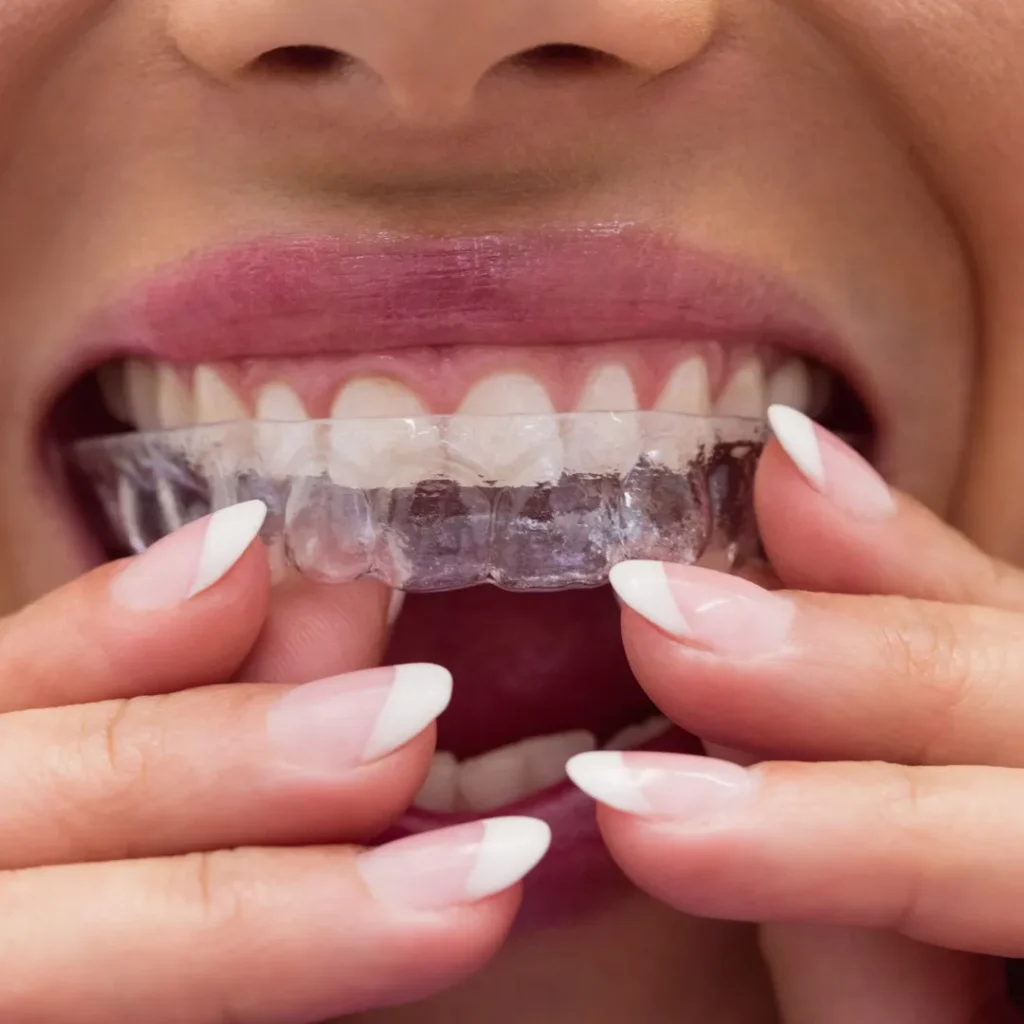
Hawley Retainer

Fixed (Lingual) Retainer

Vivera Retainers

Which Retainer Is Right for You?
Each retainer type suits different teeth and habits. Use this comparison as a guide, then let your orthodontist confirm the right choice.
| Essix (clear) | Hawley | Fixed (bonded) | Vivera | |
|---|---|---|---|---|
| How it works | Clear plastic tray over the teeth | Wire and acrylic plate | Thin wire bonded behind the teeth | Clear tray made from a digital scan |
| Removable | Yes | Yes | No | Yes |
| Visible | Almost invisible | Wire visible at the front | Not visible | Almost invisible |
| Cleaning | Brush and rinse daily | Brush and rinse daily | Floss threader or interdental brush | Brush and rinse daily |
| Often chosen after | Braces or Invisalign | Braces | Braces, for long-term retention | Invisalign |
Your orthodontist will recommend the right retainer after checking your teeth and bite. Some patients wear a fixed retainer on the lower teeth and a removable one on the upper teeth.
How to Clean and Care for Your Retainer
A fixed retainer is a thin wire bonded to the back of the front teeth. It cannot be taken out, so it holds teeth in place all day and night without any effort from you. No one sees it from the front. It needs careful cleaning, and a check-up if the wire ever feels loose.
- 1. Rinse it every time you take it out.
- 2. Brush it once a day with a soft toothbrush and lukewarm water. Use a little mild soap or non-abrasive toothpaste.
- 3. Soak it once a week in a retainer cleaner.
- 4. Never use hot or boiling water, which can warp plastic.
- 5. Take it out to eat and to drink anything other than water.
- 6. Keep it in its case when it is not in your mouth, not wrapped in a napkin, where it is easily thrown away.
My Retainer Feels Tight
My Retainer Is Cracked or Broken
My Retainer Has a White Film or a Smell
My Fixed Retainer Feels Loose
Lost, Broken or Ill-Fitting Retainer? Replacement in Dubai
When you book a replacement, we will
1. Check your teeth and bite to see whether they have moved.
2. Scan your teeth to make a new, custom retainer.
3. Advise you on whether a replacement is enough or whether you need further treatment.
We replace Essix, Hawley, Vivera and fixed retainers. We can also see patients whose treatment was completed at another clinic, after an assessment.
The Queens Elite Medical Approach to Retainers in Dubai
-
Doctors with 20+ years of experience.
Your orthodontist plans your retainer around your teeth and your bite.
-
3D scanning and digital impressions.
We scan your teeth for a precise fit, so there is no messy impression tray.
-
A plan for your wear schedule
You leave with clear instructions and a review appointment to check the fit.
-
Support afterwards
If your retainer cracks, feels tight or goes missing, we are here to replace it.
-
A convenient Dubai Marina location.
Easy to reach from Marina, JLT and Palm Jumeirah.
What to Expect at Your Retainer Appointment
-
Check.
The orthodontist examines your teeth and bite and confirms whether you need a first retainer or a replacement.
-
Scan.
We take a digital impression with our 3D scanner.
-
Fit
We fit your retainer, or bond the wire for a fixed retainer, and check your bite.
-
Plan.
You get a wear schedule, care instructions and a review appointment.
Can a Fixed (Lingual) Retainer Straighten Teeth?
What a Fixed Retainer Can Do
• Hold your teeth in place all day and night.
• Prevent relapse without you having to remember to wear it.
• Correct a very small shift in position.
What a Fixed Retainer Cannot Do
• Close large gaps.
• Fix severe crowding.
• Correct a bite problem.
If your teeth have moved a lot, you may need braces or Invisalign again. See our orthodontic treatment options.
Retainer Questions We Hear Most
How long do I need to wear a retainer after braces?
Most patients wear a retainer full-time at first, then nights only. Many orthodontists recommend long-term night wear. Your own schedule is set at your appointment.
Can I use my old retainer after several years?
If it still fits without pressure, it may be usable. If it feels tight or will not go on, do not force it. Book a check instead.
Is a fixed or a removable retainer better?
It depends on your teeth and habits. A fixed retainer needs no daily effort but needs careful cleaning. A removable retainer is easier to clean but only works if you wear it.
Do I need a retainer after Invisalign?
Yes. Teeth move back after any orthodontic treatment, and Vivera retainers are commonly used after Invisalign.
How much does a replacement retainer cost?
It depends on the type. Retainers range from AED 400 to AED 800 at our clinic, and we confirm your quote at your consultation.
Can I eat with my retainer in?
Take removable retainers out to eat and to drink anything other than water. Fixed retainers stay in, so avoid very hard or sticky foods that could loosen the wire.
Can retainers be made for treatment done elsewhere?
Yes, after an assessment. Book a consultation and we will check your teeth first.
Explore Our Retainer Guides
Find the retainer type, the care advice or the replacement option that fits you.
-
Retainer type
Hawley Retainer Dubai
A removable retainer made of wire and acrylic. See who it suits and how it works.
Read the guide → -
Retainer type
Clear Retainer Dubai
A clear, removable retainer that fits over your teeth. See what to expect.
Read the guide → -
Retainer type
Fixed Retainer Dubai
A thin wire bonded behind your teeth. Learn how it holds them in place.
Read the guide → -
Retainer type
Upper Teeth Retainer
Options for keeping your upper teeth in their new position.
Read the guide → -
After treatment
Retainers After Braces
Why you need a retainer once your braces come off and how to wear it.
Read the guide → -
After treatment
Retainers After Invisalign
How to protect your Invisalign results with the right retainer.
Read the guide → -
Lost or broken
Replacement Retainer Dubai
What to do if your retainer is lost, broken or no longer fits.
Read the guide → -
Retainer care
How to Clean a Retainer
A simple step-by-step guide to keeping your retainer clean and fresh.
Read the guide →