

Meryland Bridges

Meryland Bridges in Dubai

A Maryland Dental Bridge, also known as a resin-bonded bridge, is a conservative and minimally invasive solution for replacing one or more missing teeth. Unlike traditional bridges, a Maryland bridge does not require extensive reshaping of the adjacent teeth, making it an excellent option for patients who want to preserve their natural tooth structure.

This type of bridge is commonly used to replace front teeth, where aesthetics and minimal tooth preparation are especially important.
What Are Maryland Bridges?

A Maryland Dental Bridge, also known as a resin-bonded bridge, is a conservative and minimally invasive solution for replacing one or more missing teeth. Unlike traditional bridges, a Maryland bridge does not require extensive reshaping of the adjacent teeth, making it an excellent option for patients who want to preserve their natural tooth structure.

This type of bridge is commonly used to replace front teeth, where aesthetics and minimal tooth preparation are especially important.

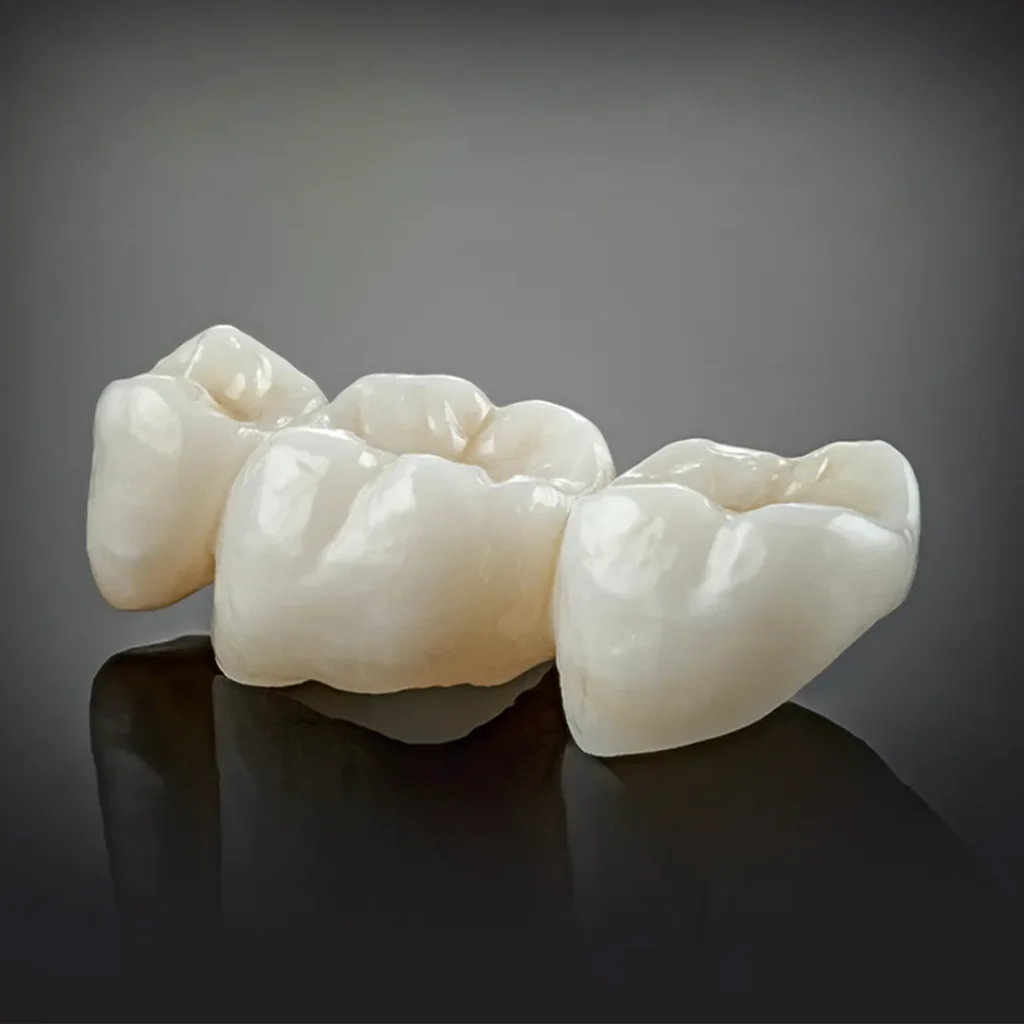
A dental bridge restoring missing teeth in a patient's mouth, representative of dental services available in Dubai.

Who Is a Good Candidate for a Maryland Bridge?

You may be a good candidate for a Maryland dental bridge if:
A dental consultation is essential to determine whether a Maryland bridge is the right solution for your specific dental needs.

Maryland Bridge vs Traditional Bridge

Maryland Bridge

Traditional Dental Bridge

Your dentist will recommend the most suitable option based on tooth location, bite pressure, and overall oral health.

What Happens During the Maryland Bridge Procedure?

The Maryland bridge procedure is straightforward and typically completed in two visits. It focuses on precision, comfort, and preserving your natural teeth.

Maryland Dental Bridge Process

  • Consultation & Assessment

    Your dentist will examine your teeth, gums, and bite. X-rays or digital scans may be taken to assess suitability. During this visit, treatment options, expectations, and timelines are discussed.

  • Preparation

    Minimal preparation is required. In most cases, only slight surface conditioning is done on the supporting teeth to help the bridge bond securely. No major drilling or enamel removal is needed.

  • Temporary Bridge

    If necessary, a temporary bridge may be placed to protect the area and maintain aesthetics while your custom Maryland bridge is being fabricated in the dental lab.

  • Bridge Fitting

    Once ready, the final Maryland bridge is carefully bonded to the back of the adjacent teeth. The dentist ensures proper fit, bite alignment, and natural appearance before securing it permanently.

Benefits of Maryland Bridges

Are Maryland Bridges Permanent?

Maryland bridges are considered long-term solutions, but they may not be permanent for everyone. With proper care and good oral hygiene, they can last 5 to 10 years or longer. Their longevity depends on bite forces, oral habits, and regular dental checkups.

Is Getting a Maryland Bridge Painful?

No, the procedure is generally painless. Since minimal tooth preparation is involved, most patients experience little to no discomfort. Local anesthesia may be used if needed, and any mild sensitivity afterward usually resolves within a few days.

Why Choose a Maryland Dental Bridge?

If you are looking for a conservative, aesthetic, and effective way to replace missing teeth—especially in the front of your mouth—a Maryland dental bridge can be an excellent choice. It restores your smile, improves function, and protects surrounding teeth without aggressive dental work.

FAQs

Does getting a dental bridge hurt?
The procedure is usually painless as it is performed under local anesthesia. You may experience mild sensitivity or soreness after the treatment, which typically subsides within a few days.
With proper oral hygiene and regular dental checkups, a dental bridge can last anywhere from 10 to 15 years or even longer. Brushing, flossing, and routine professional cleanings play a key role in its longevity.
Ideal candidates have healthy adjacent teeth, good oral hygiene, and missing teeth in low-bite-pressure areas. It is especially suitable for patients who want a minimally invasive alternative to traditional bridges.
Unlike traditional bridges, Maryland bridges do not require crowns or extensive reshaping of neighboring teeth. They are bonded from the back, making them less invasive but not as strong for back teeth.
The procedure includes consultation, minimal preparation of supporting teeth, fabrication of the bridge, and bonding it securely in place. The process is simple and usually completed in two visits.
No, the procedure is generally painless. Because minimal drilling is required, most patients experience little to no discomfort during or after treatment.
Maryland bridges are considered long-term restorations but may not be permanent for everyone. With proper care, they can last several years, though they may need replacement or re-bonding over time.
With good oral hygiene and regular dental visits, a Maryland bridge can last between 5 to 10 years or longer, depending on bite forces and lifestyle habits.
In some cases, the bonding wings may loosen due to bite pressure or wear. If this happens, the bridge can often be re-bonded by a dentist.
Yes, you can eat most foods comfortably. However, it’s advisable to avoid very hard or sticky foods to protect the bonding and extend the life of the bridge.
Daily brushing, flossing, and regular dental checkups are essential. Using floss threaders or interdental brushes helps keep the area under the bridge clean.
No, Maryland bridges are custom-made to match your natural teeth, providing a seamless and natural appearance when you smile.
Yes, a Maryland bridge can be removed or replaced if necessary. This should only be done by a qualified dentist to avoid damage to the supporting teeth.
Scroll to Top

BOOK AN APPOINTMENT

BOOK AN APPOINTMENT